*Machine Translation

By Aleksandra E. Slenter
Before starting the creation of this Pocket Guide, I had already focused on previous projects during my study at HAN University of Applied Sciences in The Netherlands on topics of sexual abuse prevention. Over time, I sensed that unless they were specialised, the awareness among social and (health) care professionals of the prevention of Child Sexual Abuse (CSA) was limited (such as risks in the intrafamilial setting). This realisation was something I wanted to research further. For that reason, I steered my latest project into CSA prevention and invited Anna Papalexiou to collaborate as a partner.
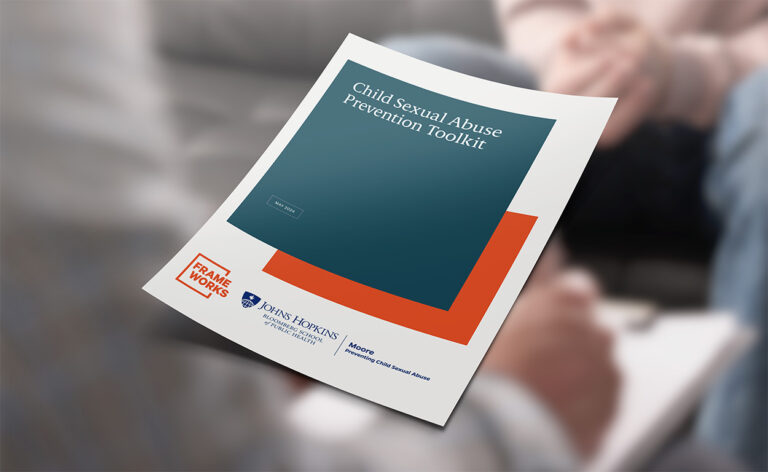
Having followed Dr. Michael Seto’s work over the years and been impressed by his extensive research and knowledge on child sexual abuse and perpetration, I decided to reach out to him to ask if he would be our commissioner for this project. To our delight, he agreed. The idea for the Pocket Guide started to take shape after conversations with Dr. Seto, who emphasised the need for a tool that could proactively help detect and prevent (intrafamilial) sexual abuse, as within this context, it is particularly challenging and complex to detect. Therefore, the prevention of CSA should be a collective effort from all stakeholders involved. There is abundant research and helpful sources on this topic, but in practice, many risks of CSA are overlooked. A practical and accessible resource about the prevention of CSA for all professionals and care givers was needed and from there, this Pocket Guide was born.
While this Pocket Guide was initially designed for front-line Social Workers, we quickly realised this tool could be applied across multiple professions. Its compact format, visual design, and bite-sized prompts make the Pocket Guide a positive and light supporting tool for anyone working with or around children and families. Whether you are a student about to embark on a child-centred internship, a nurse treating children in hospital, or a family interested in the protection of their young loved ones, this is the tool. It is simple enough to gain some quick basic knowledge, while also offering reflective prompts for deeper submersion into proactive CSA prevention. It even includes a section dedicated to individuals at risk of abusing, a stakeholder group often overlooked by non-specialists in CSA prevention, despite research consistently highlighting their relevance in effective prevention efforts.
My principal hope for this Pocket Guide is that it offers all professionals who come into contact with children, whether regularly or occasionally, a basic tool to support holistic, intersectional, non-judgmental, and trauma-informed practice. Ultimately, I hope it can continue to serve as a practical foundation that specialists and experts in the field can build upon, further expanding its application and reach. In time, I would like to see it address not only intrafamilial CSA but also other contexts, such as the specific risk factors that may arise for disabled children, who are often more vulnerable due to differences in communication, expression and dependence. This raises the question of what more can be done to proactively prevent CSA from happening to them?
I would like to thank Anna Papalexiou, my project partner, for her insight and collaboration in the development of this Pocket Guide. I am also grateful to Dr. Michael Seto for his guidance and support, as well as to the interviewees and study coaches whose perspectives shaped this Pocket Guide. This project has strengthened my commitment to CSA prevention and challenged me to translate knowledge into practice, while also deepening my active engagement in contributing to the field professionally. I would welcome the opportunity to work on similar initiatives in the future, both nationally and internationally.


The website is funded through contributions from various projects, including several EU‑funded initiatives — you can find more details about them on the About Us page. However, the views and opinions expressed are those of the author(s) of specific publications only and do not necessarily reflect those of the European Union.
Neither the European Union nor any other granting authority can be held responsible for the content.